An above ground pool paired with a well-designed deck transforms your backyard into a genuine entertaining space, not just a glorified kiddie wading area. The right deck elevates both function and aesthetics, giving you a comfortable gathering spot while protecting the pool structure and making entry and exit safer and easier. Whether you’re working with a postage-stamp lot or sprawling suburban property, there’s a deck layout and material combination that fits your needs, budget, and visual preferences. This guide walks you through the key design choices and practical considerations that turn an average pool setup into a backyard oasis worth showing off.
Table of Contents
ToggleKey Takeaways
- A well-designed above ground pool deck with wraparound or partial layouts maximizes entertaining space while improving safety, entry, and protection of the pool structure.
- Choose pressure-treated wood ($3–6 per linear foot) for budget-friendly above ground pool ideas, or invest in composite decking ($8–15 per linear foot) to minimize long-term maintenance and resist rot in wet conditions.
- Proper drainage (1/8 inch slope per foot), frost footings below the frost line, and anti-slip surfaces are essential safety features that protect both the deck and swimmers.
- Start with a modest 12×16 ft pressure-treated deck and expand in phases to spread costs over time, keeping initial material and labor budgets between $4,500–7,500.
- Positioning your deck to avoid shading the pool during peak summer hours and adding a pergola or umbrellas for strategic shade keeps water temperature ideal while maintaining guest comfort.
- Local building codes require deck railings (4-inch spacing) if 24 inches above grade, plus proper stair specifications, so verify requirements with your building department before construction begins.
Deck Styles That Elevate Your Pool Experience
Wraparound Deck Designs
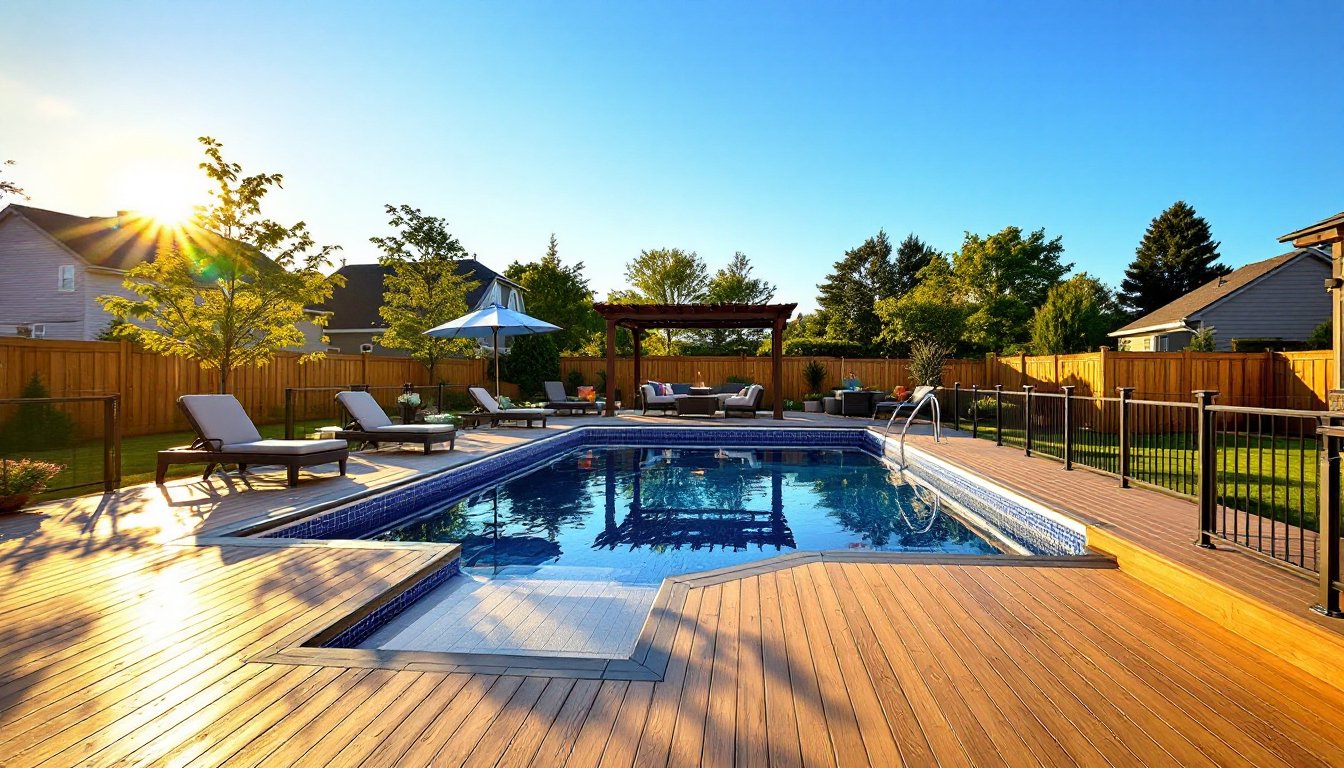
A wraparound deck creates a unified entertaining zone around the pool’s perimeter, offering flexibility for lounging, grilling, and gathering. This design maximizes usable space and eliminates awkward gaps where debris collects. For a typical 15×24 ft above ground pool, expect to frame a deck footprint of roughly 20×28 ft to 22×32 ft, depending on how wide you want the walkways and lounge areas.
Wraparound decks work best when you grade the surrounding terrain carefully. The deck must slope away from the pool at roughly 1/8 inch per foot to shed water and prevent pooling. Build the frame using pressure-treated 2×8 or 2×10 joists spaced 16 inches on center, with ledger boards securely bolted to a rim joist or concrete footer, never directly to the pool wall. Most jurisdictions require frost footings dug below the frost line (your local building department can tell you the depth: in colder regions it’s 36-48 inches), so this isn’t a surface job.
One practical advantage: a wraparound deck lets you position your grill, loungers, and a small table in different zones without crowding. Kids can safely play on the deck away from the water, and adults have seating that doesn’t feel cramped.
Partial Deck Solutions for Smaller Spaces
Not everyone has room for a full wraparound. A partial or L-shaped deck cuts material costs and labor while still delivering the benefits, safer entry, defined lounging zone, and reduced mud around the pool perimeter. Think of it as a 12×16 ft deck covering just one or two sides, leaving the rest of the pool accessible for landscaping or lawn.
Partial decks are especially smart for corner or side-yard pools where square footage is tight. You avoid overbuilding into unusable space and can expand later if the budget allows. The framing and foundation work remains the same: proper footings, adequate joist size for load-bearing (typically 2×8 for spans up to 12 feet), and positive drainage away from the pool.
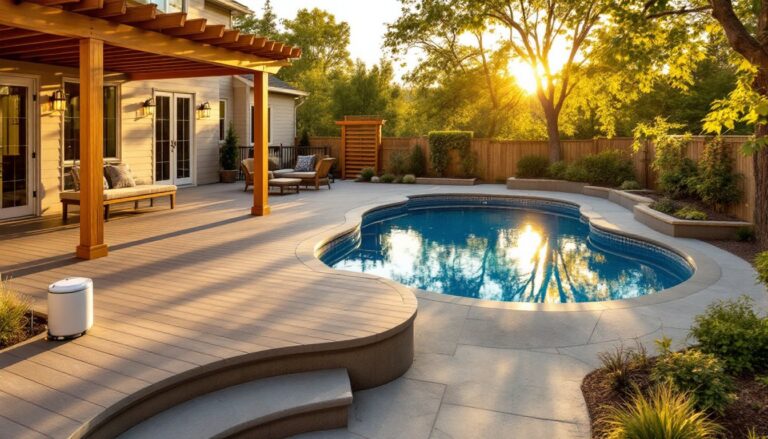
Consider an angled or curved edge on a partial deck to soften the lines and make the space feel intentional rather than “we ran out of money.” A 15-degree angle at the far corner or a gentle curve adds visual interest without major complexity if you’re comfortable with a circular saw and a straightedge guide.
Material Choices for Durability and Aesthetics
Pressure-Treated Wood vs. Composite Decking
Your deck material choice has lasting implications for maintenance, longevity, and upfront cost. Pressure-treated lumber (typically Southern pine or fir) is the budget-friendly classic and remains the most common choice for pool decks. Modern treatments use copper-based preservatives (ACQ or CA) instead of the arsenic compounds of decades past, making them safer around children and pets. A 2×6 pressure-treated board costs roughly $3–6 per linear foot, depending on your region and current lumber prices.
Pressure-treated wood requires maintenance: sand and reseal every 2–3 years to prevent graying, weathering, and eventual rot. It’s prone to splintering in high-traffic areas, especially near the pool entry where wet feet are constant. But it accepts stain and paint well, and repairs are straightforward, swap out a single board rather than replacing a large composite section.
Composite decking (wood fibers bound in plastic) costs 2–3 times more upfront, $8–15 per linear foot for mid-range brands, but requires minimal maintenance: a light wash annually and occasional spot cleaning. It doesn’t splinter, resists fading better than wood, and won’t rot in wet conditions. The tradeoff: it can soften and become slippery in direct sun (darker composites worse than lighter ones), and you can’t make quick field repairs if a plank cracks: replacement usually means ordering a replacement board from the manufacturer.
For a pool deck specifically, composite decking can actually be a smarter long-term investment if you’re hands-off on maintenance. The constant moisture exposure around the pool accelerates wood rot. If you choose pressure-treated, inspect boards annually, especially the rim joists and support structure where water pools against wood.
Layout and Safety Features That Matter
Deck layout isn’t just about aesthetics, it’s about safety and function. Start by checking local building codes: many jurisdictions require deck railings if the deck is 24 inches or higher above grade, with rails spaced no more than 4 inches apart (to prevent a child’s head from wedging through). Stairs need a handrail on at least one side and a 7–10.75 inch rise per step with a 10–11 inch tread depth. Codes vary by region, so verify with your local building department before finalizing your design.
Pool entry points should be obvious and safe. A gentle slope or a few low steps leading into the water zone reduces the risk of stumbles, especially for younger kids or older guests. Anti-slip treatments, tape, paint, or textured composite surfaces, are worth the small extra cost on pool decks: wet feet and smooth wood or plastic are a slip hazard. Apply pool cleaning products and a slippery surface sparingly near edges where people stand.
Placement matters: position your deck so it doesn’t shade the pool during peak summer hours unless you live in a scorching climate. A south-facing above ground pool in shade stays several degrees cooler and takes longer to heat. Conversely, plan shade strategically via a pergola or umbrella stands on the deck itself for lounge areas, keeping people comfortable without sacrificing water temperature.
Consider bumper rails or a low fence at the pool edge if you have young children or pets. While above ground pools have built-in walls, an extra visual cue or small barrier reminds guests (and your own family) that there’s water nearby. This is particularly important if the deck is raised and the transition from deck to pool isn’t immediately obvious.
Budget-Friendly Pool Deck Ideas
If budget constraints are real, there are ways to get a functional deck without very costly. Start with pressure-treated lumber and a simple rectangular footprint: straight lines are cheaper to frame than curves, and a straightforward design cuts labor time (whether you’re doing it yourself or hiring help).
Phased construction is a practical approach: build a modest 12×16 ft deck first, enough for lounging and entry, then expand in year two or three as budget allows. This spreads costs over time and lets you live with the layout before committing to the final size. Cost for a basic pressure-treated deck of that size runs $1,500–2,500 in materials (lumber, fasteners, concrete for footings) depending on local prices and site conditions: labor, if hired, typically adds $3,000–5,000.
Material swaps also help. Use pressure-treated 2×6 boards for the deck surface instead of premium composite, and reserve composite or nicer materials for high-visibility spots like the pool entry stairs. Stain the wood a natural gray or warm tone rather than painting: stain hides dirt and aging better and costs less to reapply.
Skip fancy built-in seating and storage initially: movable loungers and a storage box are budget-friendly and flexible. Proper pool maintenance and cleaning will also extend your deck’s life by keeping algae and mineral deposits from building up on the surface and accelerating wood rot. Finally, coordinate your deck project with spring or early fall when lumber prices tend to be more stable and contractors have better availability, potentially saving 5–10% on labor.
One final practical note: a deck doesn’t have to be elaborate to be effective. A simple, well-built 12×20 ft platform with good drainage, safe railings, and a few quality loungers beats a half-finished 24×30 ft frame that you’ll never complete.