Not every homeowner has time for fussy plants that need daily watering, humidity domes, and weekly feed schedules. If you’re juggling work, family, home projects, and life itself, adding indoor plants shouldn’t feel like adding another chore to the list. The good news: low-maintenance indoor plants are genuinely foolproof. They thrive on neglect, tolerate irregular watering, and handle the unforgiving light conditions of most homes. Whether you’re a seasoned DIYer or someone who’s killed every succulent you’ve ever touched, there’s a plant out there ready to survive, and even flourish, on your terms.
Table of Contents
ToggleKey Takeaways
- Low-maintenance indoor plants like snake plants, pothos, ZZ plants, and peace lilies thrive on neglect and handle irregular watering, making them ideal for busy homeowners.
- Proper drainage is essential—every pot must have drainage holes to prevent root rot and plant death.
- Water low-maintenance indoor plants only when the top inch of soil feels dry, using the simple finger-test method for accuracy.
- These hardy plants tolerate low to medium indirect light, making them perfect for offices, bedrooms, and dim corners without special grow lights.
- Indoor plants improve air quality by filtering toxins like formaldehyde and benzene while reducing stress, offering real environmental benefits beyond decoration.
Why Low-Maintenance Indoor Plants Are Perfect for Your Home
Indoor plants do more than sit on a shelf and look nice. They improve air quality by filtering toxins, reduce stress, and add a sense of life to indoor spaces, all without demanding constant attention. Low-maintenance varieties are the practical gateway drug to indoor gardening. They’re forgiving about watering schedules, handle low light without sulking, and won’t drop all their leaves if you forget them for two weeks during a work trip.
For homeowners managing renovations, busy schedules, or simply lacking a green thumb, these plants offer a win-win: real greenery without the guilt. They also work beautifully in spaces like home offices, entryways, and bedrooms where you want living décor without the fuss. The best part? Most low-maintenance indoor plants cost under $20 and fit on a windowsill, shelf, or corner of your living room.
Top Low-Maintenance Indoor Plants That Thrive With Minimal Care
Snake Plants and Pothos for Beginners
Snake plants (Sansevieria) are nearly indestructible. They tolerate low light, irregular watering, and temperature swings that would wilt most houseplants. Snake plants store water in their leaves, so they actually prefer you to forget them for weeks. Water every 3–4 weeks in growing season, every 6–8 weeks in winter. They’re also exceptional air-purifying plants, NASA’s air-quality research identified them as one of the top performers for removing formaldehyde and benzene.
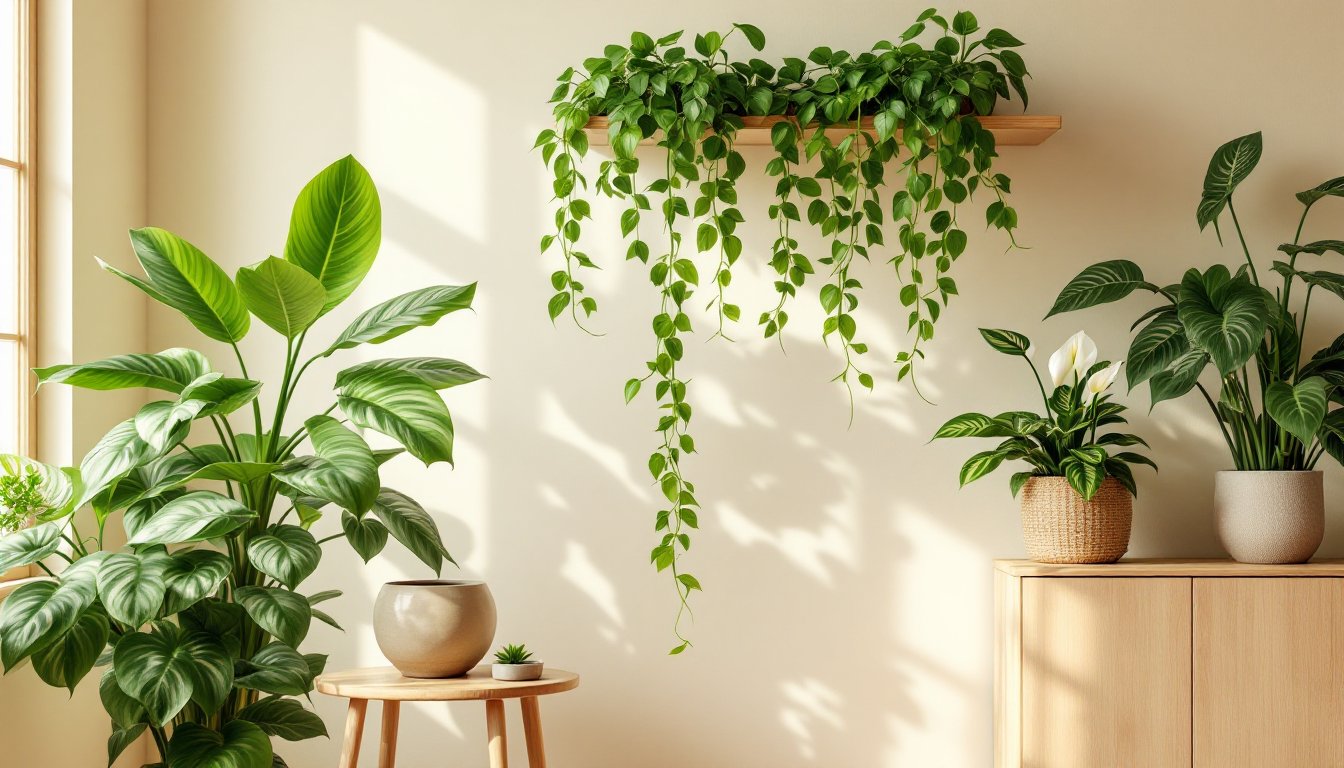
Pothos (Devil’s Ivy) grows in virtually any light condition, from dim corners to bright windowsills. It tolerates skipped waterings and even poor tap water. Pothos vines can cascade from shelves or climb a moss pole if you stake it. The trailing varieties work especially well in offices or bedrooms where you want soft, hanging greenery. Water when the soil surface feels dry: they’re flexible about frequency.
Both plants work in standard 6–8 inch ceramic or plastic pots with drainage holes. Use any general-purpose potting soil, no special blend needed. These two are where most people should start if they’ve had plant-killing streaks in the past.
ZZ Plants and Peace Lilies for Busy Schedules
ZZ plants (Zamioculcas zamiifolia) are architectural and bold, with glossy leaflets that look intentionally styled. They thrive in medium to low light, which makes them perfect for offices without windows. ZZ plants grow slowly, so they won’t outgrow your space quickly. Water every 2–3 weeks: the soil can dry out between waterings without harm. Their rhizomes (underground stems) store water, so overwatering is the main killer, keep soil moist but not soggy.
Peace lilies (Spathiphyllum) are the only low-maintenance plants on this list that give you visible feedback. When they need water, they dramatically droop, then perk back up within hours of watering. This makes them almost impossible to kill accidentally. They handle low light well, though they flower more regularly in moderate indirect light. The white spathes (modified leaves) are elegant and long-lasting. Water when the top inch of soil is dry, roughly once weekly.
Both work in standard 6–10 inch pots depending on eventual size. Low-maintenance indoor plants like these thrive in typical home conditions without fussing. Easy houseplants are ideal for busy lifestyles because they forgive neglect and irregular care.
Essential Care Tips to Keep Your Indoor Plants Thriving
Drainage is non-negotiable. Every pot needs a drainage hole. Without it, soil stays soggy, roots rot, and your plant dies, usually silently over a few weeks. If you love a pot without drainage, use it as a decorative cache pot and nestle a draining pot inside.
Watering is about frequency, not volume. Low-maintenance plants are drought-tolerant, but they still need water. The golden rule: water when the top inch of soil feels dry to your finger. Stick your index finger into the soil. If it’s moist, wait another few days. If it’s dry, water until it drains from the bottom. This works for all four plants mentioned here. Tap water is fine: you don’t need filtered or distilled water for these hardy varieties.
Light matters, but don’t stress. Most low-maintenance indoor plants tolerate low to medium light. Indirect light is ideal, bright rooms without direct afternoon sun streaming through windows. A north-facing windowsill or a spot a few feet from a south-facing window works perfectly. If your home is dimly lit, snake plants and ZZ plants will survive. Pothos and peace lilies prefer a bit more light but still handle offices with only overhead fluorescents.
Temperature and humidity are background factors. These plants handle typical home temperatures (65–75°F). They don’t need misting or humidifiers. Avoid placing pots directly above heating vents or near cold drafts, but otherwise, normal indoor conditions work fine.
Repot every 12–18 months if the plant fills its pot or if soil drains very quickly. Use fresh potting soil, moving to a pot only 1–2 inches larger in diameter. Don’t jump to a huge container, too much soil around roots invites overwatering.
Fertilize lightly during growing season (spring and summer). A balanced, diluted liquid fertilizer applied monthly is plenty. These plants aren’t heavy feeders. Skip fertilizer in fall and winter when growth slows naturally.
Beyond these basics, the best tip is observation. Check your plant weekly even if you don’t water. Look for yellow or brown leaf tips, soft stems, or pest issues (spider mites occasionally show up on indoor plants). Catching problems early, when a leaf yellows rather than when the whole plant droops, makes all the difference. Home improvement resources often, but thoughtful plant placement completes a finished room.
Conclusion
Low-maintenance indoor plants aren’t a compromise, they’re a smart choice for anyone with a real life. Snake plants, pothos, ZZ plants, and peace lilies survive neglect, tolerate variable light, and actually improve your home’s environment. Start with one or two, nail the basic care routine, and you’ll have thriving greenery in weeks. No green thumb required, just a drainage hole and a willingness to water when soil dries out. Your home, and your stress levels, will thank you.