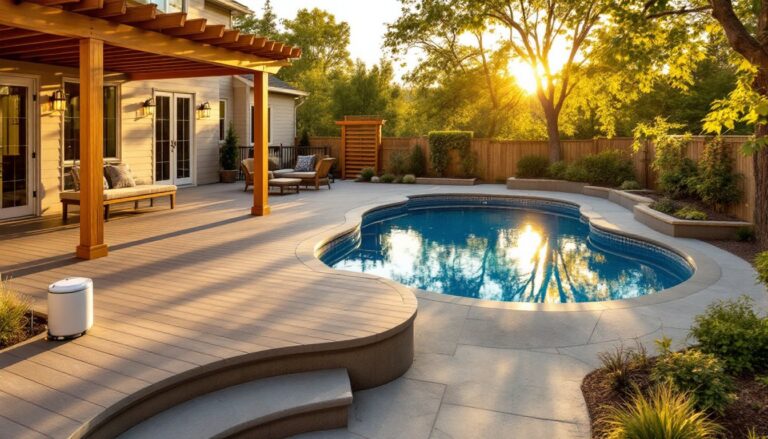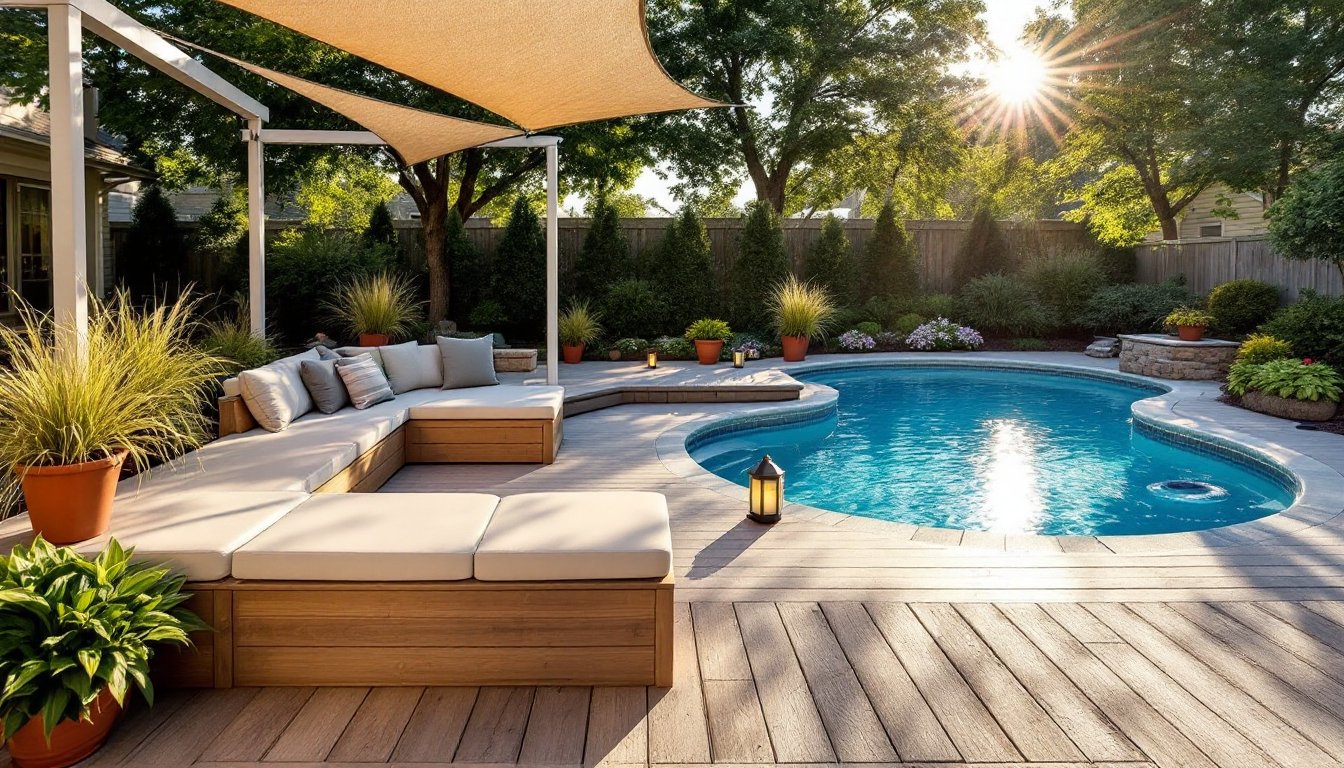
A small backyard doesn’t mean you have to sacrifice pool enjoyment, it just means you need to be strategic. Small pool deck ideas focus on maximizing every square foot while keeping the space functional and inviting. Whether you’re working with a modest above-ground pool or a compact in-ground installation, the right deck layout, materials, and features can turn a tight backyard into a relaxing retreat. This guide walks you through space-saving designs, durable materials, and budget-conscious upgrades that work for real backyards.
Table of Contents
ToggleKey Takeaways
- Small pool deck ideas work best with simple rectangular or L-shaped layouts that measure 4–6 feet wide, avoiding material waste while maintaining functionality and safety.
- Pressure-treated lumber and composite decking offer the best balance of cost and durability for small decks, with composites lasting longer but costing roughly twice as much.
- Multi-functional features like hinged bench seating, pergolas, and integrated planters maximize space by serving dual purposes on compact pool decks.
- Strategic lighting with LED post lights and floating pool lights extends evening usability while GFCI protection is required for all outdoor electrical installations near water.
- DIY-friendly projects include framing and staining wood decks, installing landscaping, and mounting solar lights, while concrete pours and electrical hardwiring should be left to professionals.
- A complete small pool deck project ranges from $1,500 to $8,000 depending on materials and scope, typically taking 2–4 weekends for DIY or 4–6 weeks with permitting and contractor work.
Space-Saving Deck Layouts for Tight Backyards
Choosing the Right Deck Size and Shape
Before you buy a single board, measure your pool and the usable space around it. A standard above-ground pool measures 15 to 27 feet in diameter, while compact in-ground pools often run 10 by 20 feet or smaller. The deck doesn’t need to wrap the entire pool, a 4 to 6-foot band on one or two sides is functional and keeps material costs down.
L-shaped decks work well for corner pools, using one side for lounging and the perpendicular section for access and a small grill or side table. If your yard is truly tight, a 3-foot-wide walkway around the pool’s entry point saves money and still provides safe circulation. Hexagonal or curved designs sound compact but actually waste material and make furniture placement awkward, stick with rectangles or simple L-shapes.
Measure the mature tree canopy too. Locating the deck away from trees reduces leaf litter and gutter maintenance. If shade’s essential, consider placing the deck in a spot where a pergola or shade sail can be added later. Existing hardscaping like your house foundation, patio, or fence may naturally define deck boundaries. Working with these existing edges saves excavation and material costs.
Best Materials for Small Pool Decks
Material choice affects durability, maintenance, slip resistance, and your total budget. Each option has real trade-offs.
Pressure-treated lumber (typically 5/4 by 6-inch boards) is affordable, roughly $2 to $4 per square foot installed, and works well for budget projects. It requires sealing every 2-3 years and has a lifespan of 10-15 years if well-maintained. Sand or texture the top surface to prevent algae-slicked slip hazards, especially around a chlorine pool.
Composite decking (wood-plastic blends like Trex or Azek) costs $8 to $12 per square foot installed but resists rot, won’t splinter, and rarely needs refinishing. It does absorb some heat, a real issue in direct sun near water, so choose a lighter shade. Composites don’t require sealing: occasional washing with mild soap keeps them clean.
Concrete or stamped concrete costs $4 to $8 per square foot and is virtually maintenance-free. Add a broom-finish or non-slip coating to prevent slipping. Concrete does expand and contract with temperature swings, so expect minor surface cracks over time. It gets hot underfoot in summer without a shade overlay.
Pavers or flagstone (natural or manufactured) run $6 to $10 per square foot installed. They look polished and handle water well, but individual units can shift, you’ll need a sand base and periodic re-leveling. Mortar joints trap algae and require occasional scrubbing.
For a small deck, composite or pressure-treated lumber offer the best balance of cost and reliability. Concrete works if you don’t mind occasional crack management.
Multi-Functional Deck Features and Built-Ins
A small deck works harder when it does double duty. Built-in seating, storage, and shaded zones squeeze more value from compact layouts.
Bench seating built along one deck edge provides lounging and backrest support while saving floor space, a 2-foot-deep bench uses less real estate than individual lounge chairs. Frame it with 2×10 or 2×12 joists (the edge support beams), bolt it securely to ledgers or posts, and seal the wood. You can hinge the seat to access under-deck storage for pool toys, chemical containers, or cushions. A hinged lid keeps weather and insects out.
Pergola or shade sail posts mounted to the deck frame create cooling zones without eating into footprint. A retractable shade sail (around $200–$400) mounts overhead and retracts when you want full sun. Proper mounting prevents wobble and ensures the structure won’t collapse under wind load, follow manufacturer specs and secure posts into footings below frost line (varies by region, check local building codes).
Planter boxes integrated into deck railings or corners add greenery without using lounge space. Drainage holes are essential to prevent water pooling. Composite decking integrates these features more easily than wood.
Side tables or a small beverage cooler recessed into the deck face adds function without sprawl. Dimension these carefully, an 18-inch-wide recess doesn’t interfere with structural joists and still holds drinks and sunscreen.
Landscaping and Greenery to Enhance Your Deck
Plants frame a pool deck and soften hard materials, but they need careful placement to avoid debris, root damage, and excessive shade.
Use potted perennials rather than in-ground plantings near the deck edge. This lets you move plants to follow shade patterns and keeps roots from invading foundation soil. Ornamental grasses (native varieties do best regionally) add movement without dropping constant leaves. Bamboo in a contained pot looks lush without the invasive root spread.
Edging plants should tolerate chlorine splash and humidity. Hostas, daylilies, and coneflowers are resilient options: consult local nurseries for region-specific recommendations. Avoid deciduous trees immediately overhead, falling leaves clog pool filters and create slip hazards on wet decking.
A low hedge (3 to 4 feet) behind or beside the deck creates privacy without blocking views entirely. Pairing landscaping with landscape design resources from reputable garden sites gives you tested plant combinations and regional growing zones.
Multch or gravel pathways adjacent to the deck define spaces without extra hardscaping cost, and they’re easy to refresh seasonally.
Lighting and Ambiance for Evening Enjoyment
A small deck extends usable hours once the sun sets. Strategic lighting makes evening swims safer and the space feel larger.
LED deck post lights (solar or low-voltage wired) cost $20 to $60 each and mount directly to railings or posts. They’re low-profile, draw minimal power, and last 25,000+ hours. Solar options need unobstructed sunlight during the day, trees or shade structures reduce effectiveness.
Under-deck lighting mounts between deck boards and illuminates the space below, creating a softer glow than overhead fixtures. This works best with composite decking or spaced board layouts. Wired LED strips (not solar) are more reliable for brightness consistency.
Landscape uplights on the pool deck’s perimeter wash trees or planting areas with color and depth. A few warm-white lights ($15 to $40 each) feel inviting: too many or garish colors read as over-the-top.
Floating pool lights (LED, $30–$75) drift on the water’s surface and feel magical without adding deck clutter. Keep cords tucked and rated for submersion.
All outdoor lighting near water should be GFCI-protected (ground fault circuit interrupter), it’s not optional. Local electrical codes require this, and a licensed electrician should wire anything permanently hardwired. Solar lights sidestep that requirement and are safe for DIY installation.
Budget-Friendly DIY Pool Deck Projects
You don’t need a contractor for every upgrade. Some projects are genuinely DIY-friendly if you prep correctly.
A pressure-treated wood deck build is doable if you own a circular saw and miter saw (or have access via rental). Frame the deck on posts sunk into concrete footings below frost line, frost heave is a real problem that shifts entire decks if you skip this step. Use pressure-treated 2×10 rim joists and 2×8 or 2×6 floor joists spaced 16 inches on center. Bolt or screw railings securely: deck railings support human weight and must meet building code (check your local IRC, typically 4-inch sphere rule for balusters, 36-inch height). Seal or stain annually. This takes a weekend for a small deck and costs roughly $600–$1,200 in materials.
Deck staining or sealing refreshes existing wood and is a solid DIY task. Use a pump sprayer or roller, apply in thin coats, and avoid pooling or drips. Rent a pressure washer ($50–$75 per day) to clean first, this is essential prep. Do this every 2-3 years on pressure-treated wood.
Planter boxes and bench seating are frame-and-screw projects if you’re comfortable with basic carpentry. Pre-cut kits exist too, though they cost more. Hinge installation requires a cordless drill and straightness when testing before final fastening.
LED lighting installation varies by type. Solar deck lights screw in place (no wiring required). Wired low-voltage systems need a licensed electrician for the main feed and GFCI installation, but you can run the low-voltage lines yourself if the electrician okays the route.
Concrete or paver work is labor-heavy and requires a level base, proper drainage slope, and often a compactor, rental costs add up. Hiring this part out saves your back and ensures longevity. Stamped concrete especially needs expertise to set joints, color, and finish evenly.
Budget Breakdown and Timeline
Small deck projects range widely in cost depending on materials and scope. A 3-foot-wide pressure-treated walkway around a 15-foot pool runs $800–$1,500 in materials and takes a weekend if you’re framing. Composite decking doubles the cost. Concrete pours need a contractor (typically $3,000–$6,000 total for a small deck, depending on finishes and site conditions).
Add landscaping ($300–$800 for plants and mulch), lighting ($200–$500 for solar or basic wired fixtures), and shade features ($400–$1,200 for a pergola or sail) as budget allows. Permits vary by jurisdiction, some decks under 200 square feet skip permitting, while others require them regardless of size. Check with your local building department before you start. Permit costs run $50–$300 and timelines add 2-4 weeks.
Timeline: A full small pool deck, framing, decking, railings, and basic landscaping, takes 2-4 weekends for DIY with a helper. Concrete or permitting timelines can stretch to 4-6 weeks total if waiting for inspection or curing. Plan your project for dry weather: wet conditions slow work and compromise material prep. Getting familiar with professional pool care and deck upkeep now prevents costly repairs later.